In her interview on WBFO-FM Prof. Elizabeth Otto, Executive Director of UB’s Humanities Institute, discusses the lineup for the Scholars@Hallwalls series of lectures.
Scholars@Hallwalls series begins Friday
21 Saturday Sep 2013
Posted in Lectures
21 Saturday Sep 2013
Posted in Lectures
In her interview on WBFO-FM Prof. Elizabeth Otto, Executive Director of UB’s Humanities Institute, discusses the lineup for the Scholars@Hallwalls series of lectures.
09 Monday Sep 2013
Posted in Uncategorized

Randomized Conte
02 Monday Sep 2013
Posted in Lectures
Tags
26 Monday Aug 2013
Posted in Conferences
Tags
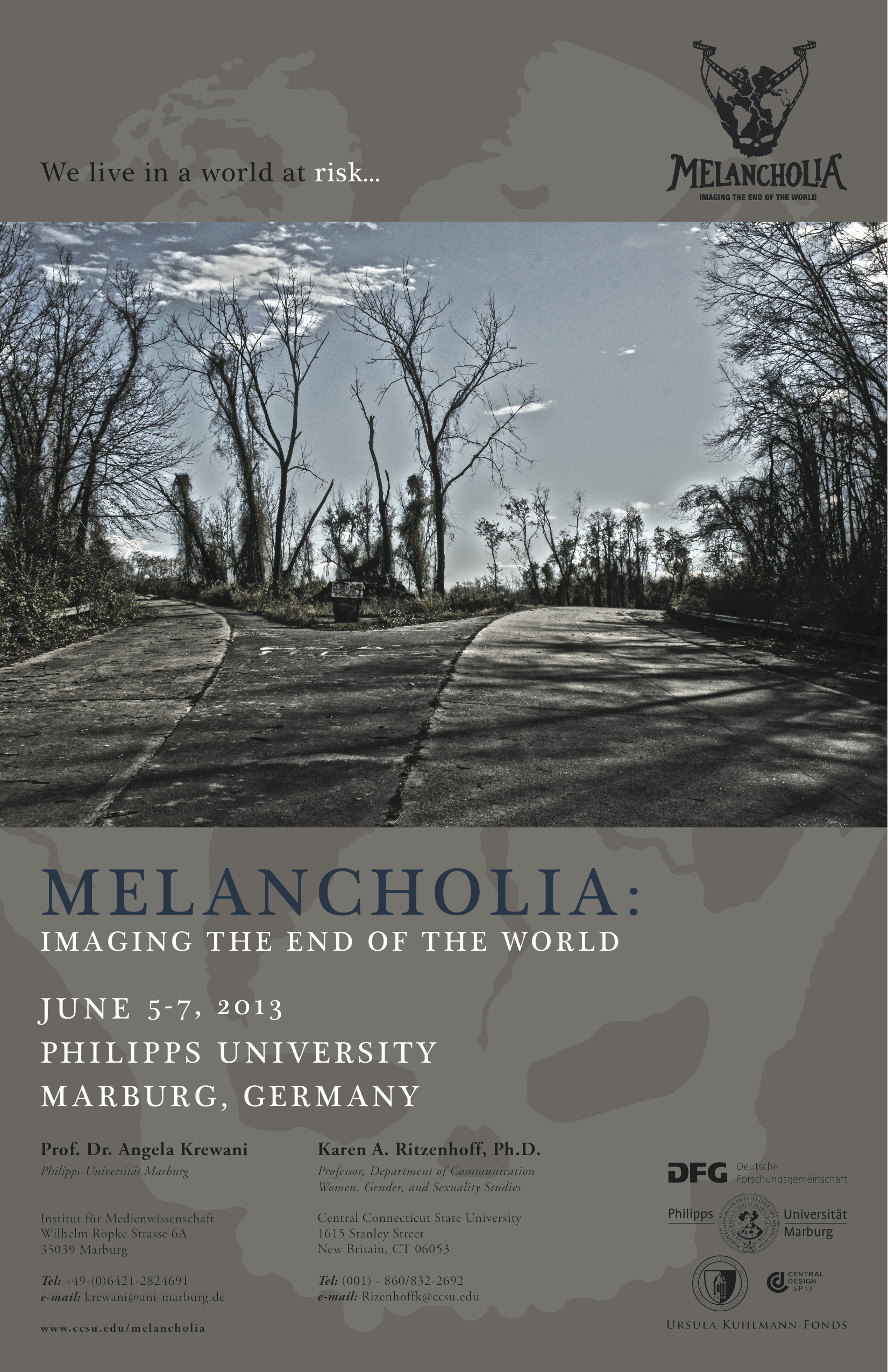
Melancholia Conference Poster
08 Thursday Aug 2013
Posted in Publications
Tags
“The Intratextual Obscurity of Louis Zukofsky’s “A”.” Journal of Language and Verbal Behaviour [Язык и Речевая Деятельность] 9 (2009): 26-32. The Linguistic Society of St. Petersburg. St. Petersburg State University, Russia.
Abstract:
Louis Zukofsky’s late poetry in the book “A” constitutes a kind of “intratext,” a poem that resides between two languages, dependent on a source text, but representing an original work on the part of the author. The bilingual character of the poem is not a translation, which traditionally emphasizes the carrying over of the sense of the original into the target language at the expense of sound, style and other poetic effects; rather Zukofsky emphasizes sound and style at the expense of a literal rendition. This compositional strategy creates a special kind of literary diffi culty that is not merely allusive of other works of literature, but a deliberate obscurity that appropriates and reconstitutes its source texts in the pursuit of an idiosyncratic linguistic beauty.
14 Sunday Jul 2013
Tags
“The Multimodal Icon: Sight, Sound and Intellection in Recent Poetries” has been published in Passage 69 (Summer 2013): 7-20. Special issue on “Lyric at the Crossroads,” edited by Louise Mønster and Peter Stein Larsen, Aarhus University Press, Denmark. Translated into Danish.
The original English version of the essay can be found under Journal Articles.
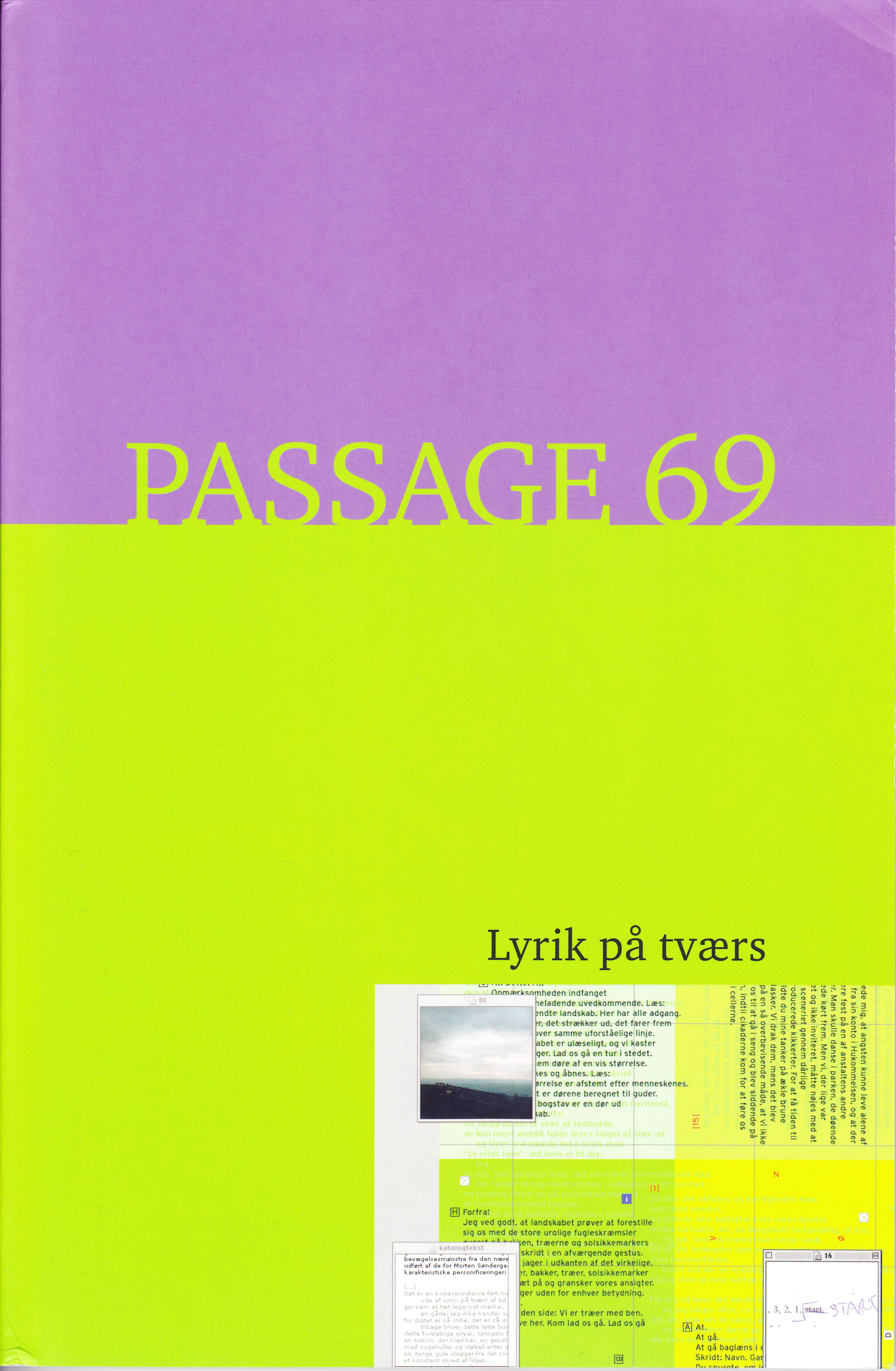
Passage 69
Posted by Joseph Conte | Filed under Publications
27 Monday May 2013
Published May 24, 2013
The UB Humanities Institute (HI) has named eight Faculty Research Fellows for 2013-14.
“Our fellows are the best. They are innovators—cutting-edge scholars whose work places them at the forefront of their disciplines,” says institute Director Erik Seeman, professor of history.
The Faculty Research Fellowships are among several offered by the institute. They will fund the fellows’ release from teaching two courses in the coming academic year, permitting them to focus on a major research project. In addition, fellows will actively participate in institute programs and present their work as part of the “Scholars @ Hallwalls” lecture series.
“The release time is very appealing, of course, but the fellowship also affords recipients the opportunity to regularly discuss their research with one another and with the public, a process that broadens everyone’s understanding of the work going on here and promotes cross-disciplinary engagement,” Seeman says.
“It is more difficult than it sounds to explain your academic work broadly and discuss its implications for the audience in particular and to society in general,” he says, adding that the fellows enjoy this challenge and say they very much enjoy discussing their work with those who ordinarily would not be exposed to it.
“Our definition of ‘humanities’ is broad,” Seeman says, “which means that our fellows come from many academic fields—literature, history, classics, anthropology, sociology, geography, music, the visual and preforming arts, and more,
“Three of the fellowships are generously supported by the Office of the Vice President for Research (OVPR). The OVPR/HI Faculty Fellows are selected from proposals that are particularly strong in the promotion of the interdisciplinary mission shared by the OVPR and the institute,” he says.
The 2013-14 HI fellows and their research projects:

Joseph Conte
06 Monday May 2013
Posted in Lectures
Tags
My lecture in the UB Humanities Institute Scholars@Hallwalls series is scheduled for Friday, December 6, 2013 at 4 pm. All lectures in the series take place at Hallwalls Contemporary Arts Center, 341 Delaware Ave in Buffalo, NY. Lectures are free and open to the public.

Scholars at Hallwalls Lecture Series
17 Wednesday Apr 2013
Announcement of the University at Buffalo Humanities Institute Faculty Research Fellows for 2013-14
Scholars at Hallwalls Lecture Series
13 Saturday Apr 2013
Posted in Conferences, Travel
Tags
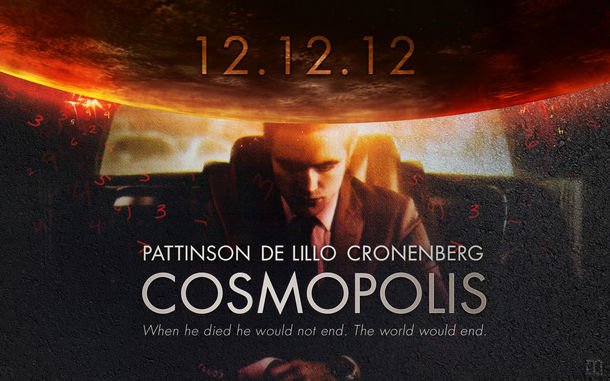 I’ll be presenting a paper on “The Ruins of the Future: Don DeLillo’s Cosmopolis, David Cronenberg’s Adaptation, and Gerhard Richter’s October 18, 1977,” at the conference on Melancholia: Imaging the End of the World, Philipps University, Marburg, Germany, June 5 to 7, 2013.
Abstract:
After the millennial apocalypse that went by the name Y2K fizzled, Americans felt secure in their leadership of the New World Order; but then the Towers fell, ushering in the twenty-first century for real as an age of terror and retribution. Don DeLillo’s novel, Cosmopolis (2003), probes the source of this catastrophe in the transnational forces of global capitalism and resistant terrorism. The novel chronicles a single day in April 2000 when the financial market suddenly loses its momentum and wobbles towards collapse. As billionaire currency speculator Eric Packer embarks on a crosstown odyssey in Manhattan, he is confronted by black flag anarchists at the NASDAQ Center, the funeral cortege of a murdered rapper, the President’s motorcade, and finally a lone assassin who resembles an amalgam of Lee Harvey Oswald and John Hinckley, Jr. DeLillo remarks that “the day on which this book takes place is the last day of an era.” The film adaptation of Cosmopolis (2012) by David Cronenberg evokes both the claustrophobic compression of a long day’s journey and a fatalistic inevitability as Packer and the country accelerate toward “the ruins of the future.” In a cotemporaneous short fiction by DeLillo, “Baader-Meinhof” (2002), strangers view the installation at the Museum of Modern Art in New York of Gerhard Richter’s cycle of fifteen canvases, October 18, 1977 (1988), that render in blurred grayscale images the suicides of German Red Army Faction terrorists, Ulrike Meinhof, Gudrun Ensslin, and Andreas Baader. Resistance to state corporatism and the origins of modern terror bring artist, novelist, and filmmaker to a vision of an apocalypse yet to come.

 Joseph M. Conte