• Home
  • Awards
  • Books
    • Edited Volumes
    • Book Chapters
    • Journal Articles
    • Book Reviews
  • Lectures
  • Conferences
  • Teaching
  • Galleries
  • Links
  • Contact
  • News

Joseph M. Conte

~ Professor of English, University at Buffalo

Joseph M. Conte

Tag Archives: Literature and Film of Immigration

“The New Global Narrative of Emigration, Transmigration, and Remigration.” Northeast Modern Language Association Convention. Georgetown University. Washington, DC. March 21-24, 2019.

09 Friday Nov 2018

Posted by Joseph Conte in Conferences

≈ Leave a comment

Tags

Literature and Film of Immigration

The literature of migration transcends the traditional borders of national literatures, native languages, colonialism, racial and ethnic divides, and religion. These fictions both represent and critique the technological consumerism, transnational politics, and cultural conflicts of migration that have come to dominate globalism. Its authors—and sometimes their texts—are bi- or multilingual, even as the world Anglophone novel trades in an English language that has become the lingua franca of an increasingly cosmopolitan citizenry. Works such as Mohsin Hamid’s Exit West (2017), Viet Thanh Nguyen’s The Refugees (2017), and Chimamanda Ngozi Adichie’s Americanah (2013) ask whether the global novel can be “ours” in the same manner as a national literature or in the form of shared humanitarian values—like the “white helmet” volunteers of the Syrian crisis—of liberality, human rights, and a progressive, social democracy. Does such a transnational literature promote positive attributes through a crosspollination or eclecticism that more readily acquaints one culture with the unique differences of another, and might that lead to creative appropriation, pluralism, tolerance, and exposure to alternative systems of belief?

NEMLA Conference 2019 CFP

Italian American Studies Association Conference

22 Saturday Oct 2016

Posted by Joseph Conte in Conferences, Lectures

≈ Leave a comment

Tags

Italian American Studies, Literature and Film of Immigration, Papers

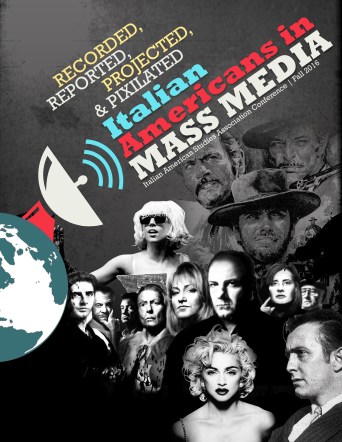
italian_americans_mass_media_poster

I’ll present a paper, “The Ritornati: Migration and Remigration in Sciascia’s ‘The Long Crossing’ and Tucci’s Big Night,” at the Italian American Studies Association Annual Conference, California State University, Long Beach, CA. November 3-5, 2016.

Abstract:

The turmoil regarding migration, immigration and remigration has engulfed both Italy (and the European Union more broadly) as well as the United States. There are two sides to the coin of migration, and historically the two countries have coped with surges of immigration and remigration (the return to one’s homeland) with unfortunately proscriptive strategies. Of the 64,900 migrants, most from sub-Saharan Africa, who sought political asylum in Italy in 2014. 6,944 were forcibly deported and the remainder of these refugees were expected to continue their trek to northern European Union countries rather than remain as “guest workers” in the struggling Italian economy.

The irony of such a massive migration into Italy and the European Union would not be lost on Sicilian writer Leonardo Sciascia, whose story, “The Long Crossing,” concerns Sicilian villagers who are conned by that day’s version of human traffickers into believing they will be deposited (as illegal immigrants) on the shores of New Jersey. Between thirty-five and fifty percent of the mostly single males who ventured to L’America returned to Italy; the ritornati were indeed remigrants. In Stanley Tucci and Campbell Scott’s film, Big Night (1996), chef Primo considers whether to return to work in his uncle’s restaurant in Rome, against his brother Secondo’s conviction that only America provides the opportunity for advancement. Migrants into both the United States and Italy have faced isolationist, xenophobic and anti-immigration political parties such as the Northern League and the Tea Party.

English 447: The Literature and Film of Immigration

11 Wednesday Mar 2015

Posted by Joseph Conte in Teaching

≈ Leave a comment

Tags

Literature and Film of Immigration

University at Buffalo

Fall 2015

Online Course

Mulberry Street, New York City (c. 1900)

Mulberry Street, New York City (c. 1900)

The path of immigration into the United States extends from the halls of Ellis Island to the globalized migration of the twenty-first century. First-generation immigrants are often driven to these shores by the blight of poverty or the sting of religious or political persecution; hope to make for themselves a fabled but often factitious “better life”; and are riven between the desire to retain old-world customs and language and the appeal of new-world comforts and technological advances. Second-generation immigrants face the duality of a national identity—striving to become recognized as “real Americans”—and an ethnic heritage that they wish to honor and sustain but which marks them as always an “other.” Here we encounter the hyphenated status of the preponderance of “natural born” American citizens. The third-generation descendent will have only indirect or acquired familiarity with his or her ethnic heritage; the loss of bilingualism or at best a second language acquired in school; and frequently a multiethnic identity resulting from the complex scrabble of American life in a mobile, suburban, and professionalized surrounding.

We will view films and read a selection of both fiction and memoir that reflect the immigrant experience in this country. Jacob Riis documents the penury and hardship of tenement life among the newly arrived underclass in How the Other Half Lives (1890). Anzia Yezierska’s novel Bread Givers (1925) treats the conflict between a devout, old-world Jewish father and a daughter who wishes to be a modern independent woman. We’ll want to compare Yezierska’s immigrant experience of 1900 with the Soviet-era migration of Russian Jews to New York in Gary Shteyngart’s comic autobiography Little Failure (2014). Mount Allegro (1989), Jerre Mangione’s memoir of growing up in the Sicilian enclave of Rochester, NY, portrays ethnicity that is insular, protective of its “imported from Italy” values, and yet desperate to find recognition as an authentic version of “Americanness.” The film Big Night (1996), directed by Campbell Scott and Stanley Tucci, serves up Italian food with abbondanza, “rich abundance,” but not a single Mafioso. In his long career as an English teacher and barroom raconteur, Frank McCourt preserved the harrowing story of his youth in Limerick, Ireland and New York for Angela’s Ashes (1997) and ‘Tis (1999); like so many immigrant families, the McCourts re-emigrated between transatlantic failures. We’ll screen the film adaptation of Angela’s Ashes, directed by Alan Parker, and read the second volume of his autobiography. Junot Díaz, in The Brief Wondrous Life of Oscar Wao (2007), follows the “Ghetto Nerd,” his voluptuous sister and hot-tempered mother between urban-industrial Paterson, New Jersey and their Dominican homeland. Finally, we’ll view the docufiction film, Who Is Dayani Cristal? starring Gael García Bernal and directed by Marc Silver, which retraces the journey made by a migrant laborer whose desiccated body was found in Arizona’s forbidding Sonora Desert.

Who Is Dayani Cristal?

Who Is Dayani Cristal?

As this is an exclusively online course, our discussion of these books and films will take place in the UB Learns environment. Writing assignments on ethnicity, identity and migration will be shared and critiqued among class members in the UB Learns discussion boards throughout the semester.
Joseph Conte

Unknown's avatar

Professor of English
University at Buffalo

Recent Posts

  • Two book chapters on Don DeLillo
  • Northeast Modern Language Association Convention 2022
  • The Encyclopedia of American Fiction, 1980-2020
  • UB English News
  • Feminist Research Alliance Workshop

Archives

  • November 2023
  • April 2022
  • November 2020
  • October 2020
  • September 2020
  • December 2019
  • November 2019
  • October 2019
  • November 2018
  • September 2018
  • July 2018
  • June 2018
  • April 2018
  • February 2018
  • October 2017
  • September 2017
  • May 2017
  • February 2017
  • October 2016
  • February 2016
  • January 2016
  • October 2015
  • April 2015
  • March 2015
  • January 2015
  • October 2014
  • September 2014
  • August 2014
  • July 2014
  • June 2014
  • November 2013
  • October 2013
  • September 2013
  • August 2013
  • July 2013
  • May 2013
  • April 2013
  • March 2013
  • February 2013

Categories

  • Awards
  • Conferences
  • Events
  • Graduate Seminars
  • Interviews
  • Lectures
  • Publications
  • Teaching
  • Travel
  • Uncategorized
  • Undergraduate Courses

Meta

  • Create account
  • Log in
  • Entries feed
  • Comments feed
  • WordPress.com

Calendar

December 2025
M T W T F S S
1234567
891011121314
15161718192021
22232425262728
293031  
« Nov    

Blog at WordPress.com.

  • Subscribe Subscribed
    • Joseph M. Conte
    • Already have a WordPress.com account? Log in now.
    • Joseph M. Conte
    • Subscribe Subscribed
    • Sign up
    • Log in
    • Report this content
    • View site in Reader
    • Manage subscriptions
    • Collapse this bar
 

Loading Comments...